






Technopedia Center
PMB University Brochure
Faculty of Engineering and Computer Science
S1 Informatics S1 Information Systems S1 Information Technology S1 Computer Engineering S1 Electrical Engineering S1 Civil Engineering

faculty of Economics and Business
S1 Management S1 Accountancy

Faculty of Letters and Educational Sciences
S1 English literature S1 English language education S1 Mathematics education S1 Sports Education
teknopedia

teknopedia

teknopedia

teknopedia

teknopedia

teknopedia
teknopedia
teknopedia
teknopedia
teknopedia
teknopedia
  • Registerasi
  • Brosur UTI
  • Kip Scholarship Information
  • Performance
  1. Wiktionary
  2. charge
charge
From Wiktionary, the free dictionary
See also: Charge, CHARGE, chargé, and Chargé

English

[edit]
English Wikipedia has an article on:
charge
Wikipedia

Etymology

[edit]
Etymology tree
Proto-Indo-European *ḱers-
Proto-Indo-European *-ós
Proto-Indo-European *ḱr̥sós
Proto-Celtic *karros
Gaulish *karrosbor.
Late Latin carrus
Late Latin -ico
Late Latin carricō
Late Latin carricāre
Old French chargierder.
Middle English chargen
English charge

    From Middle English chargen, from Old French chargier, from Late Latin carricō (“to load”), from Latin carrus (“a car, wagon”); see car. Doublet of cargo.

    Pronunciation

    [edit]
    • (Received Pronunciation) IPA(key): /t͡ʃɑːd͡ʒ/
    • (General American) IPA(key): /t͡ʃɑɹd͡ʒ/
    • Audio (US):(file)
    • Audio (General Australian):(file)
    • Audio (Southern England):(file)
    • Rhymes: -ɑː(ɹ)dʒ

    Noun

    [edit]

    charge (countable and uncountable, plural charges)

    1. The amount of money levied for a service.
      There will be a charge of five dollars.
    2. (military) An attack in which combatants rush towards an enemy in an attempt to engage in close combat.
      Pickett's Charge; the Charge of the Light Brigade
    3. A forceful forward movement.
      • 2011 March 2, Chris Whyatt, “Arsenal 5 - 0 Leyton Orient”, in BBC‎[1]:
        Abou Diaby should have added Arsenal's fourth in the 50th minute after he danced round a host of defenders on a charge towards goal
    4. An accusation.
      Synonym: count
      1. An official description (by the police or a court) of a crime that somebody may be guilty of.
        two charges of manslaughter
        • 2006, Noire [pseudonym], Thug-A-Licious: An Urban Erotic Tale, New York, N.Y.: One World, Ballantine Books, →ISBN, page 108:
          "Ain't gone be no Rikers Island for you next time," I warned him. "You get tapped on another gun charge and you looking at some upstate time."
      2. An accusation by a person or organization.
        That's a slanderous charge of abuse of trust.
        • 2005, Plato, translated by Lesley Brown, Sophist, page 261a:
          we'll nail the sophist to it, if we can get him on that charge;
        • 2006, Michael Pollan, The Omnivore's Dilemma, The Penguin Press, →ISBN, page 150:
          A charge often leveled against organic agriculture is that it is more philosophy than science.
    5. (electromagnetism, chemistry, physics, countable, uncountable) An electric charge.
    6. The scope of someone's responsibility.
      The child was in the nanny's charge.
      • 1848 April 24, John K. Kane, opinion, United States v. Hutchison, as reported in The Pennsylvania law Journal, June 1848 edition, as reprinted in, 1848,The Pennsylvania Law Journal volume 7, page 366 [2]:
        He had the key of a closet in which the moneys of this fund were kept, but the outer key of the vault, of which the closet formed part, was in the charge of another person.
    7. Someone or something entrusted to one's care, such as a child to a babysitter or a student to a teacher.
      The child was a charge of the nanny.
    8. A load or burden; cargo.
      The ship had a charge of colonists and their belongings.
    9. An instruction.
      I gave him the charge to get the deal closed by the end of the month.
    10. (property law) A mortgage.
    11. (basketball) An offensive foul in which the player with the ball moves into a stationary defender.
    12. (firearms) A measured amount of powder and/or shot in a cartridge.
    13. (by extension) A measured amount of explosive.
      • 1953, Samuel Beckett, Watt, [Paris]: Olympia Press, →OCLC:
        Watt might have broken the door down, with an axe, or a crow, or a small charge of explosive, but this might have aroused Erskine's suspicions, and Watt did not want that.
    14. (heraldry) An image displayed on an escutcheon.
      Hypernym: bearing
      Comeronym: field
      Near-synonym: emblem
    15. (weaponry) A position (of a weapon) fitted for attack.
      to bring a weapon to the charge
    16. (farriery) A sort of plaster or ointment.
    17. (obsolete) Weight; import; value.
      • c. 1599–1602 (date written), William Shakespeare, “The Tragedie of Hamlet, Prince of Denmarke”, in Mr. William Shakespeares Comedies, Histories, & Tragedies […] (First Folio), London: […] Isaac Iaggard, and Ed[ward] Blount, published 1623, →OCLC, [Act V, scene ii]:
        many suchlike as's of great charge
    18. (historical or obsolete) A measure of thirty-six pigs of lead, each pig weighing about seventy pounds; a charre.
    19. (ecclesiastical) An address given at a church service concluding a visitation.
    20. (slang, uncountable) Cannabis.
      • 1966, Alan Bestic, Turn Me on Man, page 58:
        At about the same time I went off pills and started smoking charge marijuana, you know.
      • 1970, Sean O'Callaghan, Drug Addiction in Britain, page 51:
        It had been a false alarm, and £2 worth of charge (marijuana) had gone out of the window.

    Derived terms

    [edit]
    • access charge
    • Allen charge
    • apparent charge
    • banzai charge
    • bayonet charge
    • blasting charge
    • bluff charge
    • carrying charge
    • charge account
    • chargeback
    • chargecard, charge card
    • charge carrier
    • charge conjugation
    • charge-coupled device
    • charge density
    • charge description master
    • chargeful
    • charge hand
    • chargehouse
    • chargeless
    • chargeling
    • chargeman
    • chargemaster
    • charge master
    • charge nurse
    • charge-off
    • charge of quarters
    • chargeous
    • charge plate
    • chargepoint
    • charge sheet
    • chargesheet
    • chargeship
    • charge storage
    • chargino
    • chargon
    • color charge, colour charge
    • commit charge
    • congestion charge
    • contingent charge
    • countercharge
    • cover charge
    • deferred charge
    • depth charge
    • dynamite charge
    • electric charge
    • elementary charge
    • finance charge
    • fixed charge
    • floating charge
    • forecharge
    • formal charge
    • free of charge
    • get a charge from
    • get a charge out of
    • green charge
    • handling charge
    • Highland charge
    • holding charge
    • hypercharge
    • in charge
    • isocharge
    • large charge
    • late charge
    • lathicharge
    • lead the charge
    • line charge
    • microcharge
    • midcharge
    • miscellaneous charge order
    • mischarge
    • multicharge
    • negative charge
    • nonrecurring charge
    • nuclear charge
    • partial charge
    • pastoral charge
    • Pickett's charge, Pickett's Charge
    • Planck charge
    • point charge
    • polarization charge
    • pole charge
    • positive charge
    • precharge
    • press charges
    • proof charge
    • public charge
    • redemption charge
    • rentcharge
    • resort charge
    • reverse charge
    • reverse the charge
    • sales charge
    • satchel charge
    • service charge
    • shaped charge
    • space charge
    • specific charge
    • take charge
    • trickle charge
    • upcharge
    • user charge

    Descendants

    [edit]
    • → Malay: caj (fee)
    • → Malay: cas (electrical charge)

    Translations

    [edit]
    amount of money levied for a service
    • Bulgarian: цена́ (bg) f (cená), та́кса (bg) f (táksa)
    • Catalan: cost (ca) m, preu (ca) f
    • Chinese:
      Mandarin: 費用 / 费用 (zh) (fèiyòng), 收費 / 收费 (zh) (shōufèi)
    • Czech: poplatek (cs) m, taxa (cs) f
    • Danish: pris (da) c, omkostning c
    • Esperanto: please add this translation if you can
    • Finnish: maksu (fi), veloitus (fi)
    • French: frais (fr) m pl
    • German: Entgelt (de) n
    • Greek: χρέωση (el) f (chréosi)
    • Hebrew: חיוב m (khiuv)
    • Hindi: शुल्क (hi) (śulk), लागत (hi) (lāgat), दाम (hi) (dām)
    • Hungarian: díj (hu), költség (hu)
    • Indonesian: biaya (id), beban (id)
    • Irish: muirear m, costas m, táille (ga) f
    • Italian: costo (it) m, prezzo (it) m
    • Japanese: 料金 (ja) (りょうきん, ryōkin), チャージ (ja) (chāji)
    • Khmer: ថ្លៃ (km) (thlay)
    • Korean: 요금(料金) (ko) (yogeum)
    • Lao: please add this translation if you can
    • Latin: sumptus (la) m
    • Lithuanian: mokestis m
    • Macedonian: цена (mk) f (cena), наплата f (naplata)
    • Malay: caj (ms)
    • Norwegian: pris (no) m
    • Polish: opłata (pl) f
    • Portuguese: encargo (pt) m, custo (pt) m, preço (pt) m
    • Russian: цена́ (ru) f (cená), пла́та (ru) f (pláta), та́кса (ru) f (táksa)
    • Spanish: cobranza (es) f, cobro (es) m
    • Swedish: pris (sv) n, kostnad (sv) c, avgift (sv) c
    • Thai: please add this translation if you can
    • Turkish: ücret (tr)
      Ottoman Turkish: اجرت (ücret)
    • Ukrainian: пла́та f (pláta)
    military: ground attack
    • Bulgarian: нападе́ние (bg) n (napadénie)
    • Catalan: càrrega (ca) f
    • Chinese:
      Mandarin: 衝打 / 冲打 (zh) (chōngdǎ), 衝鋒 / 冲锋 (zh) (chōngfēng)
    • Czech: zteč f, výpad m
    • Danish: angreb (da) n
    • Dutch: charge (nl) f, stormaanval m
    • Esperanto: kuratako, sturmo (eo), rajdatako
    • Finnish: rynnäkkö (fi)
    • French: charge (fr) f
    • German: Sturmangriff (de) m
    • Greek: επίθεση (el) f (epíthesi)
    • Hindi: धावा (hi) (dhāvā)
    • Hungarian: támadás (hu), roham (hu)
    • Irish: ruathar m
    • Italian: carico (it) m
    • Japanese: 突撃 (ja) (とつげき, totsugeki)
    • Korean: 돌격(突擊) (ko) (dolgyeok)
    • Macedonian: јуриш m (juriš)
    • Māori: huaki, kōkiri, āpititū
    • Norwegian: angrep n
    • Polish: szarża (pl) f
    • Portuguese: carga (pt) f
    • Russian: нападе́ние (ru) n (napadénije), ата́ка (ru) f (atáka)
    forceful forward movement — see also charging
    • Albanian: turrje
    • Chinese:
      Mandarin: 衝 / 冲 (zh) (chōng)
    • Finnish: ryntäys (fi), rynnäkkö (fi), hyökkäys (fi)
    • Norwegian:
      Bokmål: utfall (no) n
    • Spanish: arremetida (es) f, acometida (es) f, embestida (es) f
    accusation
    • Arabic: تُهْمَة f (tuhma)
    • Azerbaijani: ittiham
    • Belarusian: абвінава́чванне n (abvinaváčvannje), абвінава́чанне n (abvinaváčannje)
    • Bulgarian: обвине́ние (bg) n (obvinénie)
    • Chinese:
      Mandarin: 指控 (zh) (zhǐkòng), 起诉 (zh) (qǐsù)
    • Czech: obvinění (cs) n
    • Danish: beskyldning (da) c, søgsmål n
    • Esperanto: akuzo, kulpigo
    • Finnish: syytös (fi), syyte (fi)
    • French: chef d’accusation (fr) m, chef d’inculpation (fr) m
    • Greek: κατηγορία (el) f (katigoría)
      Ancient Greek: ἔγκλημα n (énklēma), κατηγορία f (katēgoría)
    • Hindi: आरोप (hi) (ārop), अभियोग (hi) (abhiyog)
    • Hungarian: vád (hu), vádpont (hu), vádirat (hu), vádemelés (hu), eljárás (hu)
    • Indonesian: tuduhan (id)
    • Italian: accusa (it) f, imputazione (it) f
    • Japanese: 非難 (ja) (ひなん, hinan)
    • Korean: 비난(非難) (ko) (binan)
    • Macedonian: обвинение m (obvinenie)
    • Malay: pertuduhan
    • Māori: heitara, whakapae, whakapā hē, hāmene
    • Norwegian: beskyldning c, søksmål n
    • Polish: oskarżenie (pl) n
    • Portuguese: acusação (pt) f, denúncia (pt) f
    • Romanian: acuzare (ro) f, inculpare (ro) f
    • Russian: обвине́ние (ru) n (obvinénije)
    • Slovak: obvinenie n
    • Spanish: cargo (es) m, acusación (es) f
    • Swahili: shtaka (sw)
    • Swedish: anklagelse (sv) c, beskyllning (sv) c, åtal (sv) n
    • Tagalog: sakdal
    • Ukrainian: звинува́чення (zvynuváčennja)
    • Welsh: cyhuddiad m, achwyniad m
    electric charge
    • Albanian: ngarkesa
    • Asturian: carga f
    • Azerbaijani: yük (az)
    • Bulgarian: заря́д (bg) m (zarjád)
    • Catalan: càrrega (ca) f
    • Chinese:
      Mandarin: 電荷 / 电荷 (zh) (diànhè)
    • Czech: náboj (cs) m
    • Danish: ladning c
    • Dutch: lading (nl)
    • Finnish: varaus (fi), lataus (fi), sähkövaraus (fi)
    • French: charge (fr) f
    • Galician: carga (gl) f
    • Georgian: დამუხტვა (damuxṭva), იმუხტება (imuxṭeba), დატენვა (daṭenva), იტენება (iṭeneba)
    • German: Ladung (de) f
    • Greek: φόρτιση (el) f (fórtisi)
    • Hindi: आवेश (hi) m (āveś)
    • Hungarian: töltés (hu), feltöltés (hu), töltöttség, feltöltöttség (hu)
    • Irish: lucht m
    • Italian: carica (it) f
    • Japanese: 電荷 (ja) (でんか, denka)
    • Korean: 전하(電荷) (ko) (jeonha)
    • Latin: onus electricum n
    • Latvian: pildiņš m
    • Macedonian: набој m (naboj), полнење n (polnenje), напојување n (napojuvanje), полнеж m (polnež)
    • Malay: cas elektrik (ms)
    • Māori: whana, whana hiko
    • Mongolian:
      Cyrillic: ачаалал (mn) (ačaalal)
      Mongolian script: ᠠᠴᠢᠶᠠᠯᠠᠯ (ačiyalal)
    • Norwegian: ladning (no) c
    • Persian: بار (fa) (bâr), بار الکتریکی (fa) (bâr-e elekteriki)
    • Polish: ładunek elektryczny (pl) m
    • Portuguese: carga (elétrica) f
    • Romanian: sarcină (ro) f, încărcătură (ro) f
    • Russian: заря́д (ru) m (zarjád)
    • Scottish Gaelic: luchd m
    • Spanish: carga (es) f
    • Swedish: laddning (sv) c
    • Thai: ประจุไฟฟ้า (bprà-jù-fai-fáa)
    • Ukrainian: заря́д (uk) (zarjád)
    • Vietnamese: điện tích (vi)
    • Welsh: gwefr f
    scope of responsibility
    • Chinese:
      Mandarin: 照顧範圍 / 照顾范围 (zhàogù fànwéi), 管理範圍 / 管理范围 (guǎnlǐ fànwéi)
    • Finnish: vastuu (fi)
    • Greek: υπευθυνότητα (el) f (ypefthynótita)
    • Hindi: प्रभार (prabhār)
    • Hungarian: felelősség (hu), felügyelet (hu), vezetés (hu), irányítás (hu), (lit. care/concern; this sense is mainly in the plural possessive) gond (hu)
    • Irish: cúram m
    • Japanese: 責任 (ja) (せきにん, sekinin); 義務 (ja) (ぎむ, gimu)
    • Korean: 책임(責任) (ko) (chaegim), 의무(義務) (ko) (uimu)
    • Latin: tūtēla f
    • Macedonian: надлежност f (nadležnost), грижа f (griža)
    • Romanian: sarcină (ro) f
    • Russian: отве́тственность (ru) f (otvétstvennostʹ), попече́ние (ru) n (popečénije)
    • Vietnamese: trách nhiệm (vi), nghĩa vụ (vi)
    someone or something entrusted to one's care
    • Albanian: ngarkuar (sq)
    • Chinese:
      Mandarin: 托付 (zh) (tuōfù)
    • Finnish: vastuu (fi), holhokki
    • Greek: ευθύνη (el) f (efthýni)
    • Hungarian: gondjaira bízott személy/dolog
    • Japanese: 受託物 (じゅたくぶつ, jutakubutsu)
    • Korean: 수탁물(受託物) (ko) (sutangmul)
    • Māori: whakataute
    • Polish: podopieczny (pl), podopieczna (pl) f
    • Russian: подопе́чный (ru) m (podopéčnyj)
    • Turkish:
      Ottoman Turkish: امانت (emânet)
    load or burden
    • Albanian: barrë (sq), ngarkesë (sq)
    • Bulgarian: това́р (bg) m (továr)
    • Catalan: càrrega (ca) f
    • Chinese:
      Mandarin: 負載 / 负载 (zh) (fùzài)
    • Danish: læs n
    • Dutch: lading (nl), last (nl)
    • Finnish: kuorma (fi), taakka (fi), lasti (fi)
    • French: charge (fr) f
    • German: Last (de) f
    • Greek: φορτίο (el) n (fortío)
    • Hindi: भार (hi) (bhār)
    • Hungarian: teher (hu), rakomány (hu), szállítmány (hu), terhelés (hu)
    • Irish: muirear m
    • Italian: carico (it) m
    • Japanese: 荷 (ja) (に, ni)
    • Korean: 짐 (ko) (jim)
    • Macedonian: товар m (tovar), бреме f or n (breme)
    • Norwegian: byrde m
    • Polish: ładunek (pl) m
    • Portuguese: carga (pt) f, fardo (pt) m
    • Russian: това́р (ru) m (továr), груз (ru) m (gruz), бре́мя (ru) n (brémja)
    • Swedish: last (sv) c
    instruction
    • Bulgarian: предписа́ние (bg) n (predpisánie)
    • Catalan: encàrrec (ca) f
    • Chinese:
      Mandarin: 指示 (zh) (zhǐshì)
    • Danish: anklage (da) c, ordre (da) c
    • Finnish: määräys (fi), ohje (fi), neuvo (fi)
    • French: charge (fr) f
    • Hindi: आदेश (hi) (ādeś), निर्देश (hi) (nirdeś), आज्ञा (hi) (ājñā)
    • Hungarian: megbízás (hu), megbízatás (hu), feladat (hu), utasítás (hu), kötelezettség (hu)
    • Italian: incarico (it) m, compito (it) m
    • Japanese: 命令 (ja) (めいれい, meirei)
    • Korean: 명령(命令) (ko) (myeongnyeong)
    • Macedonian: задача f (zadača), доверување n (doveruvanje)
    • Norwegian: ordre (no) m
    • Portuguese: encargo (pt) m
    • Russian: зада́ча (ru) f (zadáča), предписа́ние (ru) n (predpisánije), инстру́кция (ru) f (instrúkcija), поруче́ние (ru) n (poručénije)
    • Spanish: encargo (es) m
    property law: mortgage — see mortgage
    basketball: offensive foul
    • Catalan: càrrega (ca) f
    • Chinese:
      Mandarin: 帶球撞人 / 带球撞人 (dàiqiú zhuàngrén)
    • Finnish: törmääminen (fi), törmäysvirhe
    • German: Rempeln n
    • Italian: sfondamento (it) f
    • Japanese: チャージング (chājingu)
    • Korean: 차징 (chajing)
    measured amount of powder and/or shot
    • Bulgarian: заря́д (bg) m (zarjád)
    • Chinese:
      Mandarin: 彈藥 / 弹药 (zh) (dànyào)
    • Finnish: lataus (fi)
    • French: charge (fr) f
    • Hungarian: töltet (hu), töltés (hu)
    • Italian: carica (it) f
    • Japanese: 装填 (ja) (そうてん, sōten)
    • Korean: 장전(裝塡) (jangjeon)
    • Macedonian: полнење n (polnenje)
    • Portuguese: carga (pt) f
    • Russian: заря́д (ru) m (zarjád)
    • Swedish: laddning (sv) c
    • Turkish: barut hakkı (tr)
    measured amount of explosive
    • Finnish: lataus (fi), panos (fi), panostus (fi)
    • Polish: ładunek (pl) m
    • Turkish: barut hakkı (tr)
    heraldry: image displayed on an escutcheon
    • Chinese:
      Mandarin: 紋章 / 纹章 (zh) (wénzhāng)
    • Finnish: tunnus (fi), tunnuskuvio, vaakuna (fi), logo (fi)
    • French: meuble (fr) m
    • Hungarian: címerábra
    • Japanese: 紋 (ja) (もん, mon)
    • Korean: 문양(文樣) (ko) (munyang)
    • Macedonian: чесна фигу́ра f (česna figúra)
    • Polish: figura herbowa f, figura heraldyczna f
    • Spanish: figura (es) f, cargo (es) m
    • Swedish: sköldemärke (sv) n
    position of a weapon fitted for attack
    • Finnish: tana (fi)
    • Italian: carica (it) f
    sort of plaster or ointment
    weight; import; value
    measure of thirty-six pigs of lead — see charre
    address given at a church service concluding a visitation

    Verb

    [edit]

    charge (third-person singular simple present charges, present participle charging, simple past and past participle charged)

    1. To assign a duty or responsibility to; to order.
      • 1611, The Holy Bible, […] (King James Version), London: […] Robert Barker, […], →OCLC, Joshua 22:5:
        Moses […] charged you to love the Lord your God.
      • 1613 (date written), William Shakespeare, [John Fletcher], “The Famous History of the Life of King Henry the Eight”, in Mr. William Shakespeares Comedies, Histories, & Tragedies […] (First Folio), London: […] Isaac Iaggard, and Ed[ward] Blount, published 1623, →OCLC, [Act III, scene ii]:
        Cromwell, I charge thee, fling away ambition.
    2. (transitive) To assign (a debit) to an account.
      Let's charge this to marketing.
    3. (ambitransitive) To require payment (of) (a price or fee, for goods, services, etc.).
      to charge high for goods
      I won't charge you for the wheat.
      • 2013 July 19, Peter Wilby, “Finland spreads word on schools”, in The Guardian Weekly, volume 189, number 6, page 30:
        Imagine a country where children do nothing but play until they start compulsory schooling at age seven. Then, without exception, they attend comprehensives until the age of 16. Charging school fees is illegal, and so is sorting pupils into ability groups by streaming or setting.
    4. (transitive, chiefly US) To pay on account, as by using a credit card.
      Can I charge my purchase to my credit card?
      Can I charge this purchase?
    5. (transitive, dated) To sell (something) at a given price.
      to charge coal at $5 per unit
    6. (transitive, criminal law, law enforcement) To formally accuse (a person) of a crime.
      Synonyms: criminate, inculpate, indict; see also Thesaurus:incriminate
      I'm charging you with assault and battery.
    7. (transitive, property law) To mortgage (a property).
    8. To impute or ascribe.
      Synonyms: attribute, chalk up to, put down to; see also Thesaurus:ascribe
      • 1693, Decimus Junius Juvenalis, John Dryden, transl., “[The Satires of Decimus Junius Juvenalis.] The Third Satyr”, in The Satires of Decimus Junius Juvenalis. Translated into English Verse. […] Together with the Satires of Aulus Persius Flaccus. […], London: […] Jacob Tonson […], →OCLC:
        No more accuse thy pen, but charge the crime / On native sloth, and negligence of time.
      • 1966, Stringfellow Barr, The Mask of Jove:
        He lacked the art of wounding with the sword, and in any case his critics charged that he shrank from steel; but his invective was worthy of Demosthenes and his words drew blood.
    9. To call to account; to challenge.
      • c. 1596 (date written), William Shakespeare, “The Life and Death of King Iohn”, in Mr. William Shakespeares Comedies, Histories, & Tragedies […] (First Folio), London: […] Isaac Iaggard, and Ed[ward] Blount, published 1623, →OCLC, [Act III, scene i]:
        to charge me to an answer
    10. (transitive) To place a burden, load or responsibility on or in.
      • 1693, [John Locke], “§64”, in Some Thoughts Concerning Education, London: […] A[wnsham] and J[ohn] Churchill, […], →OCLC:
        the charging of children's memories […] with rules
      • 1800, James Hogg, The Mysterious Bride:
        [H]er grandfather […] charged her as she valued her life never to mention that again […]
      • 1911, The Encyclopedia Britannica, entry on Moya:
        [A] huge torrent of boiling black mud, charged with blocks of rock and moving with enormous rapidity, rolled like an avalanche down the gorge.
      1. To ornament with or cause to bear.
        to charge an architectural member with a moulding
      2. (heraldry) To assume as a bearing.
        He charges three roses.
      3. (heraldry) To add to or represent on.
        He charges his shield with three roses or.
        • 1956 July, Col. H. C. B. Rogers, “Railway Heraldry”, in Railway Magazine, pages 476-477:
          Within a blue garter inscribed "Great Northern Railway Ireland" is a shield, on which are marshalled the arms of the principal towns in the company's area. The shield is divided quarterly with the arms of Dublin in the first quarter, Londonderry in the second quarter, Enniskillen in the third, and Belfast in the fourth; and overall is a gold inescutcheon (a small shield placed in the centre of the large shield) charged with the red left hand of Ulster.
    11. (transitive) To load equipment with material required for its use, as a firearm with powder, a fire hose with water, a chemical reactor with raw materials.
      Charge your weapons; we're moving up.
      • c. 1596 (date written), William Shakespeare, “The Life and Death of King Iohn”, in Mr. William Shakespeares Comedies, Histories, & Tragedies […] (First Folio), London: […] Isaac Iaggard, and Ed[ward] Blount, published 1623, →OCLC, [Act II, scene i]:
        their battering cannon charged to the mouths
      1. (transitive) To cause to take on an electric charge.
        Rubbing amber with wool will charge it quickly.
      2. (transitive) To replenish energy to (a battery, or a device containing a battery) by use of an electrical device plugged into a power outlet.
        He charged the battery overnight.
        Don't forget to charge the drill.
        I charge my phone every night.
      3. (intransitive, of a battery or a device containing a battery) To replenish energy.
        The battery is still charging: I can't use it yet.
        His cell phone charges very quickly, whereas mine takes forever.
    12. (intransitive) To move forward quickly and forcefully, particularly in combat and/or on horseback.
      • 2019 February 27, Drachinifel, 16:22 from the start, in The Battle of Samar - Odds? What are those?‎[3], archived from the original on 3 November 2022:
        Faced with an enemy whose largest gun turrets weigh more than the entire ship, Johnston decides that running is boring, and instead pulls a full 180-degree turn and charges straight back at the attacking forces.
      1. (military, transitive and intransitive) To attack by moving forward quickly in a group.
        The impetuous corps charged the enemy lines.
        • c. 1587–1588 (date written), [Christopher Marlowe], Tamburlaine the Great. […] The First Part […], 2nd edition, part 1, London: […] [R. Robinson for] Richard Iones, […], published 1592, →OCLC; reprinted as Tamburlaine the Great (A Scolar Press Facsimile), Menston, Yorkshire; London: Scolar Press, 1973, →ISBN, Act II, scene iii:
          My Lord, we haue diſcouered the enemie
          Readie to Charge you with a mightie army.
      2. (basketball) To commit a charging foul.
      3. (cricket, of a batsman) To take a few steps down the pitch towards the bowler as they deliver the ball, either to disrupt the length of the delivery, or to get into a better position to hit the ball.
    13. (transitive, of a hunting dog) To lie on the belly and be still. (A command given by a hunter to a dog)

    Derived terms

    [edit]
    Prefixed forms
    • countercharge
    • discharge
    • double-charge
    • forecharge
    • mischarge
    • outcharge
    • overcharge
    • recharge
    • reverse-charge
    • supercharge
    • trickle charge
    • turbocharge
    • twincharge
    • uncharge
    • undercharge
    • upcharge
    Suffixed forms
    • chargeable
    • chargee
    • charger
    Other derivations
    • CHAdeMO
    • charge down
    • chargehand
    • charge like a wounded bull
    • charge off
    • charge the mound
    • charge up
    • chip and charge

    Related terms

    [edit]
    • carack
    • cargo
    • caricature
    • cark
    • discharge
    • surcharge

    Descendants

    [edit]
    • → Cantonese: 叉廚 / 叉厨 (caa1 cyu4), 叉 (caa1)
    • → Dutch: chargen
    • → Kashubian: czardżowac (United States)
    • → Malay: caj, cas
    • → Sranan Tongo: tyars
    • → Swahili: chaji

    Translations

    [edit]
    to assign a duty to
    • Albanian: ngarko
    • Azerbaijani: həvalə etmək, tapşırmaq (az), üzərinə qoymaq
    • Bulgarian: възла́гам (bg) impf (vǎzlágam), поверя́вам (bg) impf (poverjávam)
    • Catalan: encarregar (ca)
    • Czech: pověřit
    • Danish: give opgave
    • Dutch: opdragen (nl)
    • Finnish: määrätä (fi), käskeä (fi)
    • French: charger (fr)
    • German: beauftragen (de), verpflichten (de), zuweisen (de), anweisen (de)
    • Hungarian: megbíz (hu), rábíz (hu), kiró (hu), kioszt (hu)
    • Italian: incaricare (it)
    • Macedonian: дове́рува (dovéruva), за́дава (zádava)
    • Norwegian: gi oppgave
    • Occitan: encargar (oc)
    • Portuguese: encarregar (pt)
    • Russian: возлага́ть (ru) impf (vozlagátʹ), возложи́ть (ru) pf (vozložítʹ), вменя́ть в обя́занность impf (vmenjátʹ v objázannostʹ), вмени́ть в обя́занность pf (vmenítʹ v objázannostʹ)
    • Ukrainian: поклада́ти відповіда́льність (pokladáty vidpovidálʹnistʹ), доруча́ти (doručáty)
    to assign a debit to an account
    • Bulgarian: задължа́вам (bg) impf (zadǎlžávam)
    • Finnish: veloittaa (fi), laittaa (fi), panna (fi)
    • French: charger (fr)
    • Galician: cargar (gl), cobrar (gl)
    • German: buchen (de)
    • Greek: χρεώνω (el) (chreóno)
    • Italian: addebitare (it)
    • Japanese: (please verify) 借方に記入する (かりかたにきにゅうする, karikata ni kinyūsuru)
    • Korean: (please verify) 차변에 기입하다 (chabyeon-e giiphada)
    • Macedonian: наплаќа (naplaḱa)
    • Russian: запи́сывать (ru) impf (zapísyvatʹ), записа́ть (ru) pf (zapisátʹ) (на счёт)
    • Spanish: cargar (es), cobrar (es)
    to pay on account
    • Bulgarian: задължа́вам (bg) impf (zadǎlžávam)
    • Finnish: maksaa luottokortilla, maksaa (fi), maksaa luotolla
    • French: charger (fr), créditer (fr)
    • German: belasten (de)
    • Italian: caricare (it)
    • Japanese: (please verify) つけにする (tsuke ni suru)
    • Korean: (please verify) 신용 구매하다 (sinyong gumaehada), 외상질하다 (oesangjilhada)
    • Macedonian: наплатува (naplatuva)
    to demand, require payment
    • Chinese:
      Mandarin: 收費 / 收费 (zh) (shōufèi)
    • Finnish: laskuttaa (fi), veloittaa (fi)
    • Galician: cobrar (gl)
    • German: berechnen (de), in Rechnung stellen
    • Greek: χρεώνω (el) (chreóno)
    • Hungarian: felszámít (hu), kér (hu), felszámláz, kiszámláz (hu)
    • Italian: caricare (it)
    • Japanese: 請求する (ja) (せいきゅうする, seikyū suru)
    • Kabuverdianu: kobra
    • Korean: 청구하다 (cheongguhada)
    • Macedonian: на́плаќа (náplaḱa)
    • Malay: caj (ms)
    • Polish: pobierać opłatę impf, pobrać opłatę pf
    • Portuguese: cobrar (pt)
    • Russian: взима́ть (ru) impf (vzimátʹ), снима́ть пла́ту impf (snimátʹ plátu), снять пла́ту pf (snjatʹ plátu)
    • Spanish: cobrar (es)
    • Thai: please add this translation if you can
    • Ukrainian: зніма́ти пла́ту impf (znimáty plátu)
    • Zulu: -biza
    criminal law, law enforcement: to formally accuse of a crime — see also accuse,‎ inculpate
    • Arabic: اِتَّهَمَ (ittahama)
    • Azerbaijani: ittihamlar irəli sürmək, ittihamlandırmaq
    • Belarusian: абвінава́чваць impf (abvinaváčvacʹ), абвінава́ціць pf (abvinavácicʹ)
    • Bulgarian: обвиня́вам (bg) impf (obvinjávam)
    • Catalan: acusar (ca), inculpar (ca)
    • Chinese:
      Mandarin: 控告 (zh) (kònggào)
    • Czech: obviňovat (cs) impf, obvinit (cs) pf
    • Danish: sagsøge
    • Dutch: aanklagen (nl)
    • Esperanto: kulpigi
    • Finnish: syyttää (fi)
    • French: accuser (fr), charger (fr)
    • Galician: acusar a (gl), acusar (gl)
    • German: anklagen (de), beschuldigen (de)
    • Hungarian: vádol (hu), megvádol (hu)
    • Italian: accusare (it), imputare (it)
    • Japanese: 告発する (ja) (こくはつする, kokuhatsu suru)
    • Korean: 고발하다 (ko) (gobalhada)
    • Macedonian: обвинува impf (obvinuva), обвини pf (obvini)
    • Māori: whakapā hē, whakapae, hāmene
    • Norwegian: saksøke
    • Polish: oskarżać (pl) impf, oskarżyć (pl) pf
    • Portuguese: acusar (pt)
    • Romanian: acuza (ro), inculpa (ro)
    • Russian: обвиня́ть (ru) impf (obvinjátʹ), обвини́ть (ru) pf (obvinítʹ)
    • Slovak: obviňovať impf, obviniť pf
    • Swedish: anklaga (sv)
    • Ukrainian: звинува́чувати impf (zvynuváčuvaty), звинува́тити pf (zvynuvátyty)
    property law: to mortgage — see mortgage
    to place a burden upon, to assign a duty
    • Azerbaijani: yükləmək (az)
    • Bulgarian: натова́рвам (bg) impf (natovárvam), обременя́вам (bg) impf (obremenjávam)
    • Danish: belaste, bebyrde
    • Dutch: belasten (nl)
    • Finnish: kuormata (fi), sälyttää (fi), määrätä (fi), nimittää (fi)
    • French: armer (fr), charger (fr)
    • German: beauftragen (de), belasten (de), verpflichten (de), zuweisen (de)
    • Hungarian: megterhel (hu), megrak (hu), megpakol (hu)
    • Irish: luchtaigh
    • Italian: incaricare (it), accollare (it)
    • Macedonian: то́вари (tóvari), обреме́нува (obreménuva)
    • Norwegian: belaste, bebyrde
    • Portuguese: encarregar (pt)
    • Russian: обременя́ть (ru) impf (obremenjátʹ), обремени́ть (ru) pf (obremenítʹ) (burden), загружа́ть (ru) impf (zagružátʹ), загрузи́ть (ru) pf (zagruzítʹ) (load)
    • Ukrainian: обтя́жувати (uk) (obtjážuvaty)
    to load equipment with material required for its use
    • Armenian: please add this translation if you can
    • Azerbaijani: yükləmək (az), doldurmaq (az)
    • Belarusian: зараджа́ць impf (zaradžácʹ), зарадзі́ць pf (zaradzícʹ)
    • Bulgarian: пъ́лня (bg) impf (pǎ́lnja)
    • Danish: lade (da)
    • Esperanto: ŝarĝi
    • Finnish: ladata (fi)
    • French: charger (fr)
    • Friulian: cjariâ
    • Georgian: please add this translation if you can
    • German: laden (de), beladen (de), füllen (de), befüllen (de)
    • Hungarian: feltölt (hu), tölt (hu)
    • Italian: caricare (it)
    • Khmer: ផ្ទុក (km) (phtuk)
    • Latvian: pildīt, uzpildīt, kraut (lv), iekraut
    • Macedonian: полни (polni)
    • Mongolian: please add this translation if you can
    • Polish: ładować (pl) impf, naładować (pl) pf
    • Portuguese: carregar (pt)
    • Romanian: încărca (ro)
    • Russian: заряжа́ть (ru) impf (zarjažátʹ), заряди́ть (ru) pf (zarjadítʹ)
    • Spanish: cargar (es)
    • Swedish: ladda (sv)
    • Thai: please add this translation if you can
    • Ukrainian: заряджа́ти impf (zarjadžáty), заряди́ти pf (zarjadýty)
    • Vietnamese: nạp (vi)
    • Welsh: (please verify) gwefrio, (please verify) gwefru (cy)
    to cause to take on an electric charge
    • Arabic: شَحَنَ (šaḥana)
    • Azerbaijani: yükləmək (az)
    • Belarusian: зараджа́ць impf (zaradžácʹ), зарадзі́ць pf (zaradzícʹ)
    • Bulgarian: заре́ждам (bg) impf (zaréždam), заредя́ pf (zaredjá)
    • Chinese:
      Mandarin: 充電 / 充电 (zh) (chōngdiàn)
    • Czech: nabíjet (cs) impf, nabít (cs) pf
    • Danish: oplade (da)
    • Esperanto: ŝargi
    • Estonian: please add this translation if you can
    • Finnish: varata (fi)
    • French: charger (fr)
    • Galician: cargar (gl)
    • German: aufladen (de)
    • Hungarian: feltölt (hu), tölt (hu)
    • Irish: luchtaigh
    • Italian: caricare (it)
    • Japanese: 荷電させる (ja) (かでんさせる, kaden saseru), 充電する (ja) (じゅうでんする, jūden suru)
    • Korean: 충전하다 (chungjeonhada)
    • Latvian: pildīt, uzpildīt
    • Lithuanian: please add this translation if you can
    • Macedonian: напојува (napojuva), полни (polni)
    • Polish: ładować (pl) impf, naładować (pl) pf
    • Portuguese: carregar (pt)
    • Romanian: încărca (ro)
    • Russian: заряжа́ть (ru) impf (zarjažátʹ), заряди́ть (ru) pf (zarjadítʹ)
    • Slovak: nabíjať impf, nabiť pf
    • Spanish: cargar (es)
    • Swedish: ladda (sv), ladda upp (sv)
    • Thai: please add this translation if you can
    • Ukrainian: заряджа́ти impf (zarjadžáty), заряди́ти pf (zarjadýty)
    • Vietnamese: nạp điện (vi)
    to add energy to
    • Arabic: شَحَنَ (šaḥana)
    • Armenian: լիցքավորել (hy) (licʻkʻavorel)
    • Azerbaijani: yükləmək (az)
    • Belarusian: зараджа́ць impf (zaradžácʹ), зарадзі́ць pf (zaradzícʹ)
    • Bulgarian: заре́ждам (bg) impf (zaréždam), заредя́ pf (zaredjá)
    • Danish: lade (da)
    • Esperanto: ŝargi
    • Finnish: ladata (fi)
    • Galician: cargar (gl)
    • Georgian: ტენის (ṭenis), მუხტავს (muxṭavs)
    • German: laden (de), aufladen (de)
    • Greek: φορτίζω (el) (fortízo)
    • Hebrew: הטעין (hit’ín)
    • Hungarian: tölt (hu), feltölt (hu)
    • Irish: luchtaigh
    • Italian: caricare (it)
    • Japanese: 充電する (ja) (じゅうでんする, jūden suru)
    • Khmer: សាក (km) (saak), បញ្ចូល (km) (bɑñcoul)
    • Korean: 충전하다 (chungjeonhada)
    • Lao: please add this translation if you can
    • Latvian: pildīt, uzpildīt
    • Māori: whakakaha
    • Mongolian: please add this translation if you can
    • Polish: ładować (pl) impf, naładować (pl) pf
    • Portuguese: carregar (pt)
    • Romanian: încărca (ro)
    • Russian: заряжа́ть (ru) impf (zarjažátʹ), заряди́ть (ru) pf (zarjadítʹ)
    • Spanish: cargar (es), energizar (es), repostar (es)
    • Swahili: chaji (sw)
    • Swedish: ladda (sv)
    • Thai: ชาร์จ (th) (cháat)
    • Tibetan: please add this translation if you can
    • Ukrainian: заряджа́ти impf (zarjadžáty), заряди́ти pf (zarjadýty)
    • Vietnamese: nạp (vi), nạp điện (vi)
    intransitive: of a battery or device: to gain energy — see also energize
    • Azerbaijani: enerji yığmaq, dolmaq
    • Belarusian: зараджа́цца impf (zaradžácca), зарадзі́цца pf (zaradzícca)
    • Bulgarian: заре́ждам се (bg) impf (zaréždam se), заредя́ се pf (zaredjá se)
    • Danish: lade (da), lade op, oplade (da)
    • Finnish: latautua (fi)
    • Galician: cargar (gl)
    • Georgian: იმუხტება (imuxṭeba), იტენება (iṭeneba)
    • German: laden (de), aufladen (de)
    • Hebrew: נטען (nit’án)
    • Hungarian: töltődik (hu), feltöltődik (hu)
    • Italian: ricaricare (it)
    • Korean: 충전되다 (chungjeondoeda)
    • Latvian: pildīt, uzpildīt
    • Māori: whakakaha
    • Polish: ładować się (pl) impf, naładować się (pl) pf
    • Portuguese: carregar (pt)
    • Romanian: încărca (ro)
    • Russian: заряжа́ться (ru) impf (zarjažátʹsja), заряди́ться (ru) pf (zarjadítʹsja)
    • Spanish: cargar (es), energizarse (es), repostarse (es)
    • Swahili: chaji (sw)
    • Ukrainian: заряджа́тися impf (zarjadžátysja), заряди́тися pf (zarjadýtysja)
    • Vietnamese: nạp điện (vi)
    to move forward forcefully — see also accost
    • Danish: storme
    • Finnish: hyökätä (fi), rynnistää, rynnätä (fi)
    • French: charger (fr)
    • German: stürmen (de), vorwärtsstürmen (de), vorwärts pressen
    • Hungarian: kiront (hu), kirohan (hu), beront (hu), berohan (hu), rohan (hu), száguld (hu)
    • Macedonian: јуриша (juriša), јурнува impf (jurnuva)
    • Middle English: launcen, launchen, swyngen
    • Portuguese: carregar (pt)
    • Spanish: arremeter contra, embestir (es), acometer (es)
    military: to attack by moving forward quickly
    • Arabic: هَاجَمَ (hājama)
    • Belarusian: атакава́ць impf or pf (atakavácʹ), напада́ць impf (napadácʹ), напа́сці pf (napásci)
    • Bulgarian: атаку́вам (bg) impf or pf (atakúvam), напа́дам (bg) impf (napádam)
    • Chinese:
      Mandarin: 衝鋒 / 冲锋 (zh) (chōngfēng), 攻擊 / 攻击 (zh) (gōngjī, gōngjí)
    • Danish: storme
    • Esperanto: sturmi, kurataki, rajdataki
    • Finnish: rynnäköidä (fi), hyökätä (fi)
    • German: bestürmen (de), vorstürmen (de)
    • Greek: γιούργια (el) f (gioúrgia)
      Ancient Greek: προσφέρομαι (prosphéromai)
      Ancient Greek: ἐμπίπτω (empíptō)
    • Hungarian: támad (hu), megtámad (hu), megrohamoz (hu), ostromol (hu), megostromol (hu), ráront (hu), nekiront (hu)
    • Japanese: 突撃する (ja) (とつげきする, totsugeki suru)
    • Korean: 돌격하다 (ko) (dolgyeokhada), 공격하다 (ko) (gonggyeokhada)
    • Macedonian: атакува impf or pf (atakuva), нападне impf (napadne), напаѓа pf (napaǵa)
    • Māori: amo, kōkiri, huaki, āpititū, whakangahoro
    • Middle English: launcen, launchen
    • Polish: szarżować impf, atakować (pl) impf or pf, napadać (pl) impf, napaść (pl) pf
    • Portuguese: carregar (pt), assaltar (pt)
    • Russian: атакова́ть (ru) impf or pf (atakovátʹ), напада́ть (ru) impf (napadátʹ), напа́сть (ru) pf (napástʹ), штурмова́ть (ru) impf (šturmovátʹ)
    • Spanish: atacar (es), arremeter contra, embestir (es), acometer (es)
    • Ukrainian: атакува́ти (uk) impf or pf (atakuváty), напада́ти impf (napadáty), напа́сти pf (napásty)
    basketball: to commit a charging foul
    • Finnish: törmätä (fi)
    cricket: to take a few steps down the pitch towards the bowler as he delivers the ball
    • French: charger (fr), s'élancer (fr)
    The translations below need to be checked and inserted above into the appropriate translation tables. See instructions at Wiktionary:Entry layout § Translations.
    Translations to be checked
    • Italian: (please verify) caricare (it)

    Further reading

    [edit]
    • “charge”, in Webster’s Revised Unabridged Dictionary, Springfield, Mass.: G. & C. Merriam, 1913, →OCLC.
    • William Dwight Whitney, Benjamin E[li] Smith, editors (1911), “charge”, in The Century Dictionary […], New York, N.Y.: The Century Co., →OCLC.

    Anagrams

    [edit]
    • Creagh

    Dutch

    [edit]

    Alternative forms

    [edit]
    • chargie (obsolete)

    Etymology

    [edit]

    Borrowed from Middle French charge.

    Pronunciation

    [edit]
    • IPA(key): /ˈʃɑr.ʒə/
    • Audio:(file)
    • Hyphenation: char‧ge

    Noun

    [edit]

    charge f (plural charges, no diminutive)

    1. a charge (fast ground attack)

    Derived terms

    [edit]
    • cavaleriecharge

    Related terms

    [edit]
    • chargeren

    Descendants

    [edit]
    • Afrikaans: sarsie

    French

    [edit]

    Etymology

    [edit]

    Inherited from Middle French charge, from Old French charge, carge, equivalent to a deverbal from charger.

    Pronunciation

    [edit]
    • IPA(key): /ʃaʁʒ/
    • Audio:(file)
    • Audio (France (Vosges)):(file)
    • Audio (France (Vosges)):(file)
    • Audio (France (Lyon)):(file)

    Noun

    [edit]

    charge f (plural charges)

    1. load, burden
      charge pesante ― heavy load
    2. cargo, freight
      La charge de ce bateau est de cinquante tonneaux. ― The freight of this boat is fifty tons.
    3. responsibility, charge
      J'ai la charge de vous dire que... ― I have the responsibility to tell you that...
    4. (law) charge
      Ce fait constitue une charge très grave contre le prévenu. ― This fact constitutes a very serious charge against the accused.
    5. (military) charge
      une charge massive contre les positions allemandes ― a massive charge against the German positions
    6. caricature, comic exaggeration
    7. (physics) charge
    8. (heraldry) charge
    9. (in the plural) costs, expenses

    Derived terms

    [edit]
    • à charge de revanche
    • au pas de charge
    • cahier des charges
    • charge utile
    • charge virale
    • en charge de
    • femme de charge
    • prendre en charge
    • prise en charge
    • revenir à la charge

    Related terms

    [edit]
    • chargement
    • charger

    Descendants

    [edit]
    • → Brazilian Portuguese: charge
    • → Romanian: șarjă
    • → Turkish: şarj, şarz (misspelling)

    Verb

    [edit]

    charge

    1. inflection of charger:
      1. first/third-person singular present indicative/subjunctive
      2. second-person singular imperative

    Further reading

    [edit]
    • “charge”, in Trésor de la langue française informatisé [Digitized Treasury of the French Language], 2012

    Anagrams

    [edit]
    • gâcher

    Middle English

    [edit]

    Verb

    [edit]

    charge

    1. first-person singular present indicative of chargen
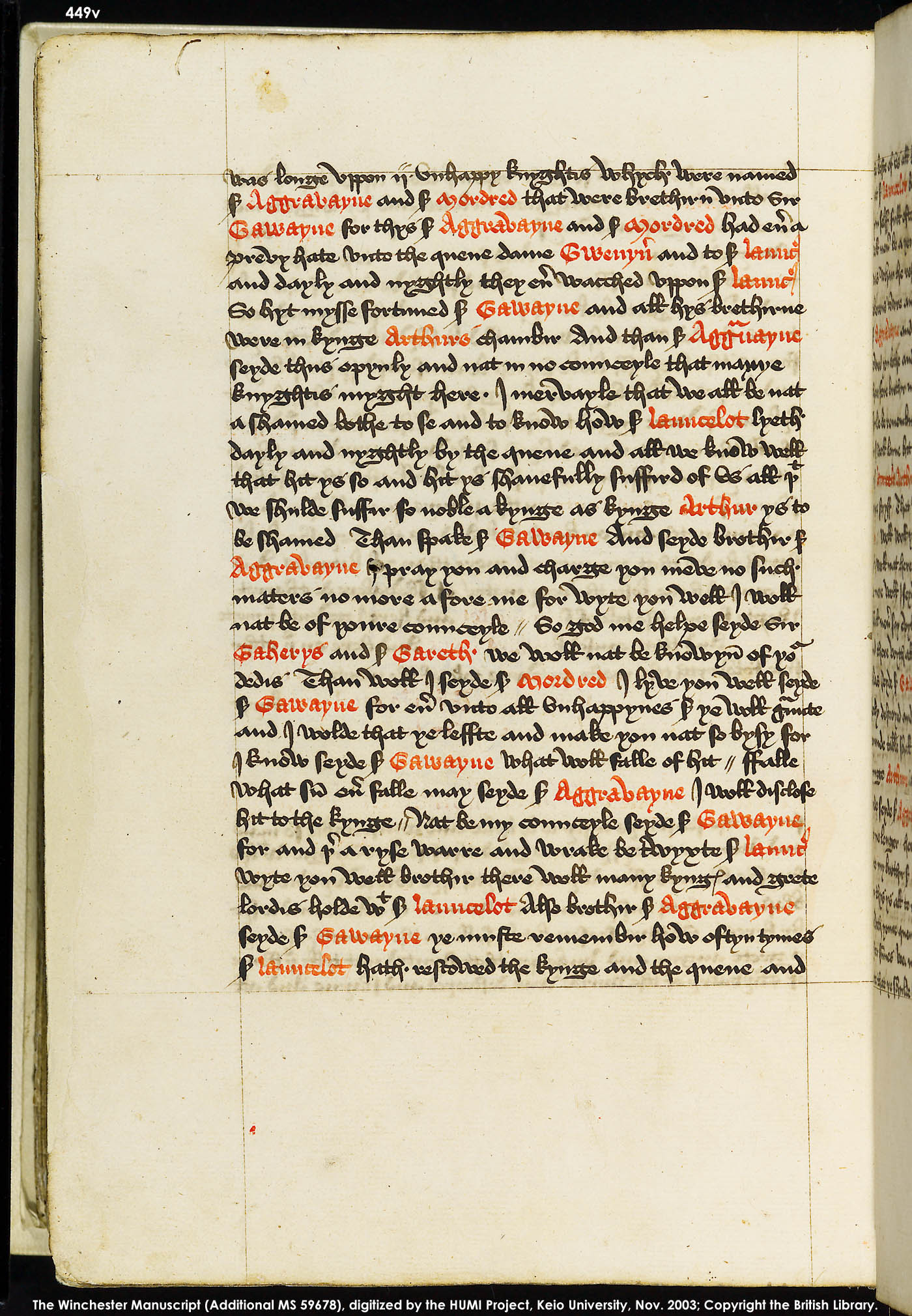
      • 1470–1483 (date produced), Thom̃s Malleorre [i.e., Thomas Malory], “[Morte Arthur]”, in Le Morte Darthur (British Library Additional Manuscript 59678), [England: s.n.], folio 449, verso, lines 15–18:
        Than ſpake ẜ Gawayne And ſeyde brothir · ẜ Aggravayne I pray you and charge you meve no ſuch · maters no more a fore me fro wyte you well I woll nat be of youre counceyle //
        Then spoke Sir Gawain, and said, “Brother, Sir Agrivain, I pray you and charge you move not such matters any more before me, for be ye assured I will not be of your counsel.”

    Portuguese

    [edit]

    Etymology

    [edit]

    Borrowed from French charge.[1][2]

    Pronunciation

    [edit]
     
    • (Brazil) IPA(key): /ˈʃaʁ.ʒi/ [ˈʃaɦ.ʒi]
    • (Brazil) IPA(key): /ˈʃaʁ.ʒi/ [ˈʃaɦ.ʒi]
      • (São Paulo) IPA(key): /ˈʃaɾ.ʒi/
      • (Rio de Janeiro) IPA(key): /ˈʃaʁ.ʒi/
      • (Caipira) IPA(key): /ˈʃaɻ.ʒi/
      • (Southern Brazil) IPA(key): /ˈʃaʁ.ʒe/ [ˈʃaɦ.ʒe]

    Noun

    [edit]

    charge f (plural charges)

    1. (Brazil) cartoon (satire of public figures)
      Synonym: caricatura

    References

    [edit]
    1. ^ “charge”, in Dicionário infopédia da Lingua Portuguesa (in Portuguese), Porto: Porto Editora, 2003–2026
    2. ^ “charge”, in Dicionário Priberam da Língua Portuguesa (in Portuguese), Lisbon: Priberam, 2008–2026

    Further reading

    [edit]
    • charge on the Portuguese Wikipedia.Wikipedia pt
    • “charge”, in Dicionário Aulete Digital (in Portuguese), Rio de Janeiro: Lexikon Editora Digital, 2008–2026
    Retrieved from "https://en.wiktionary.org/w/index.php?title=charge&oldid=89463652"
    Categories:
    • English terms derived from Gaulish
    • English terms inherited from Middle English
    • English terms derived from the Proto-Indo-European root *ḱers-
    • English terms derived from Proto-Indo-European
    • English terms derived from Late Latin
    • English terms derived from Middle English
    • English terms derived from Proto-Celtic
    • English terms derived from Old French
    • English terms derived from Latin
    • English doublets
    • English 1-syllable words
    • English terms with IPA pronunciation
    • English terms with audio pronunciation
    • Rhymes:English/ɑː(ɹ)dʒ
    • Rhymes:English/ɑː(ɹ)dʒ/1 syllable
    • English lemmas
    • English nouns
    • English uncountable nouns
    • English countable nouns
    • English terms with usage examples
    • en:Military
    • English terms with quotations
    • en:Electromagnetism
    • en:Chemistry
    • en:Physics
    • en:Property law
    • en:Basketball
    • en:Firearms
    • en:Heraldry
    • en:Weapons
    • en:Farriery
    • English terms with obsolete senses
    • English terms with historical senses
    • English ecclesiastical terms
    • English slang
    • English verbs
    • English transitive verbs
    • English intransitive verbs
    • American English
    • English dated terms
    • en:Criminal law
    • en:Law enforcement
    • en:Cricket
    • en:Physical quantities
    • English ergative verbs
    • en:Explosives
    • en:People
    • Dutch terms borrowed from Middle French
    • Dutch terms derived from Middle French
    • Dutch terms with IPA pronunciation
    • Dutch terms with audio pronunciation
    • Dutch lemmas
    • Dutch nouns
    • Dutch nouns with plural in -s
    • Dutch feminine nouns
    • French terms inherited from Middle French
    • French terms derived from Middle French
    • French terms inherited from Old French
    • French terms derived from Old French
    • French 1-syllable words
    • French terms with IPA pronunciation
    • French terms with audio pronunciation
    • French lemmas
    • French nouns
    • French countable nouns
    • French feminine nouns
    • French terms with usage examples
    • fr:Law
    • fr:Military
    • fr:Physics
    • fr:Heraldry
    • French non-lemma forms
    • French verb forms
    • Middle English non-lemma forms
    • Middle English verb forms
    • Middle English first-person singular forms
    • Middle English terms with quotations
    • Portuguese terms borrowed from French
    • Portuguese terms derived from French
    • Portuguese 2-syllable words
    • Portuguese terms with IPA pronunciation
    • Portuguese lemmas
    • Portuguese nouns
    • Portuguese countable nouns
    • Portuguese feminine nouns
    • Brazilian Portuguese
    Hidden categories:
    • Pages with etymology trees
    • English entries with etymology trees
    • Pages with inline etymon for redlinks
    • Pages using etymon with no ID
    • English entries referencing etymons with mismatched IDs
    • Pages with entries
    • Pages with 5 entries
    • Quotation templates to be cleaned
    • Entries with translation boxes
    • Terms with Bulgarian translations
    • Terms with Catalan translations
    • Mandarin terms with redundant transliterations
    • Terms with Mandarin translations
    • Terms with Czech translations
    • Terms with Danish translations
    • Requests for translations into Esperanto
    • Terms with Finnish translations
    • Terms with French translations
    • Terms with German translations
    • Terms with Greek translations
    • Terms with Hebrew translations
    • Terms with Hindi translations
    • Terms with Hungarian translations
    • Terms with Indonesian translations
    • Terms with Irish translations
    • Terms with Italian translations
    • Terms with Japanese translations
    • Terms with Khmer translations
    • Terms with Korean translations
    • Requests for translations into Lao
    • Terms with Latin translations
    • Terms with Lithuanian translations
    • Terms with Macedonian translations
    • Terms with Malay translations
    • Terms with Norwegian translations
    • Terms with Polish translations
    • Terms with Portuguese translations
    • Terms with Russian translations
    • Terms with Spanish translations
    • Terms with Swedish translations
    • Requests for translations into Thai
    • Terms with Turkish translations
    • Terms with Ottoman Turkish translations
    • Terms with Ukrainian translations
    • Terms with Dutch translations
    • Terms with Esperanto translations
    • Terms with Māori translations
    • Terms with Albanian translations
    • Terms with Norwegian Bokmål translations
    • Terms with Arabic translations
    • Terms with Azerbaijani translations
    • Terms with Belarusian translations
    • Terms with Ancient Greek translations
    • Terms with Romanian translations
    • Terms with Slovak translations
    • Terms with Swahili translations
    • Terms with Tagalog translations
    • Terms with Welsh translations
    • Terms with Asturian translations
    • Terms with Galician translations
    • Terms with Georgian translations
    • Terms with Latvian translations
    • Terms with Mongolian translations
    • Terms with Persian translations
    • Terms with Scottish Gaelic translations
    • Terms with Thai translations
    • Terms with Vietnamese translations
    • Mandarin terms with non-redundant manual transliterations
    • Terms with Occitan translations
    • Requests for review of Japanese translations
    • Requests for review of Korean translations
    • Terms with Kabuverdianu translations
    • Terms with Zulu translations
    • Requests for translations into Armenian
    • Terms with Friulian translations
    • Requests for translations into Georgian
    • Requests for translations into Mongolian
    • Requests for review of Welsh translations
    • Requests for translations into Estonian
    • Requests for translations into Lithuanian
    • Terms with Armenian translations
    • Requests for translations into Tibetan
    • Terms with Middle English translations
    • Requests for review of Italian translations

    • indonesia
    • Polski
    • العربية
    • Deutsch
    • English
    • Español
    • Français
    • Italiano
    • مصرى
    • Nederlands
    • 日本語
    • Português
    • Sinugboanong Binisaya
    • Svenska
    • Українська
    • Tiếng Việt
    • Winaray
    • 中文
    • Русский
    Sunting pranala
    Pusat Layanan

    UNIVERSITAS TEKNOKRAT INDONESIA | ASEAN's Best Private University
    Jl. ZA. Pagar Alam No.9 -11, Labuhan Ratu, Kec. Kedaton, Kota Bandar Lampung, Lampung 35132
    Phone: (0721) 702022
    Email: pmb@teknokrat.ac.id